Good artwork for custom chenille patches is less about the file type and more about the instructions around it. Customized Chenille Patches gets you to an approved design fastest when you mark which areas are chenille pile, felt or embroidery, name every color, state the finished size and garment, then review the free 24-hour mockup against a short checklist before you approve.
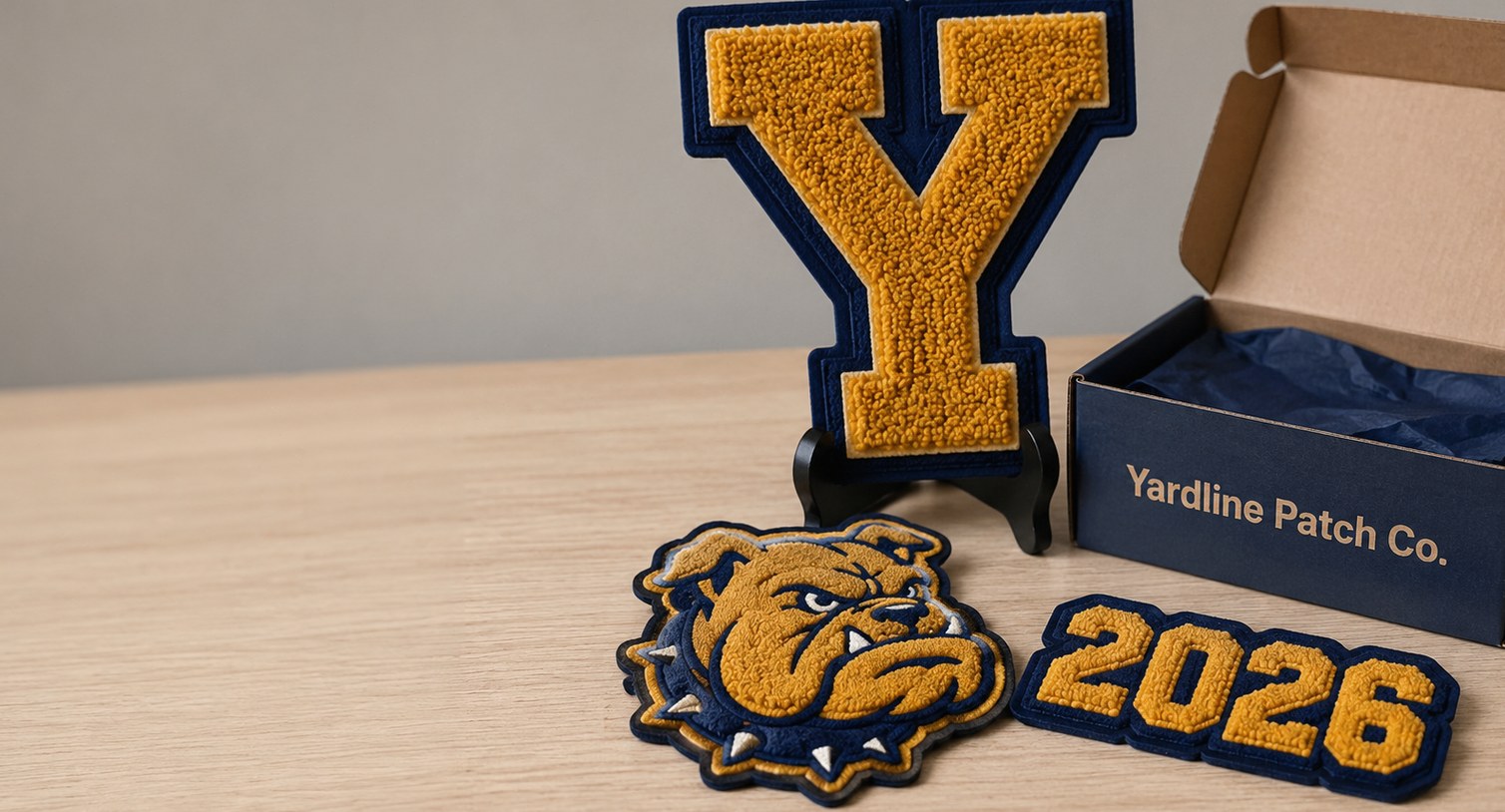
- Customized Chenille Patches returns a free mockup within 24 hours of receiving your artwork and notes.
- Revisions to the mockup are unlimited and free until the design looks right.
- You pay nothing until you approve the design.
- Standard production takes about 2 weeks after approval, with faster turnaround available with express shipping.
- Chenille patches are built in layers: raised chenille pile, flat felt and fine embroidered detail.
What artwork do I need to start a custom chenille patch order?
To start a custom chenille patches order you need a clear picture of the design plus written notes that explain how it should be built. A clean vector logo is ideal, but a sharp image, a scan of an old letter or even a careful sketch is enough to begin, as long as the notes fill in what the image cannot show.
Chenille is not printed, so the art team at Customized Chenille Patches has to translate your design into stitched layers. The file shows the shapes. Your notes tell the team which shapes become raised pile, which stay flat felt, what colors each layer uses, how big the finished patch is and what it will be sewn or pressed onto.
A complete artwork submission usually includes:
- The design file or image, at the best quality you have.
- A one-line description of the patch, such as a block letter with a mascot insert or a script name for a hoodie.
- Color names or references for every area of the design.
- The finished size in words or measured from a garment you own.
- The garment type and its color.
- The backing you want, sew-on or iron-on.
- Any names, numbers or years that change from patch to patch, sent as a list.
Which parts of a design should be chenille, felt or embroidery?
Every chenille patch is a stack of materials, and deciding which part of your design lives in which layer is the single most useful thing you can do before sending artwork. Large, bold areas belong in chenille pile. Backgrounds, outlines and borders usually sit in flat felt. Fine lines, small text and tiny details are stitched as embroidery on top.
Chenille yarn forms soft loops, and loops swallow thin strokes. A mascot eye, a thin outline or a small date will read better as embroidery or chain stitch than as pile. If you are unsure, mark the areas you care about most and let Customized Chenille Patches suggest the build on the mockup. Our article on why detailed logos struggle in chenille goes deeper on simplifying a busy design.
| Design element | Usual layer | Why |
|---|---|---|
| Main letter, mascot body, large shapes | Chenille pile | The raised texture is the point of the patch and reads from across a room. |
| Background panel and outer border | Felt | Felt gives a crisp edge and a flat frame that makes the pile stand out. |
| Script names and signatures | Chain stitch | A continuous stitched line keeps lettering clean and readable. |
| Small text, years, fine lines | Embroidery | Tight stitches hold detail that loops cannot. |
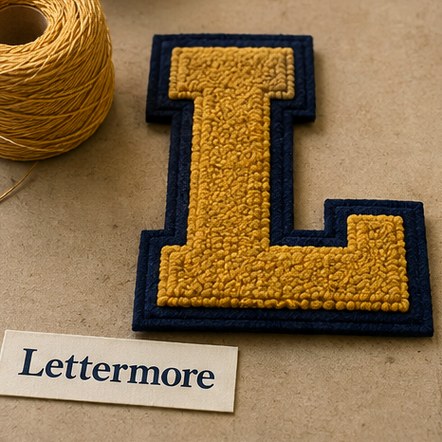
How should I specify colors for chenille patches?
Specify colors for chenille patches by naming every area of the design and giving each one a color reference, not just by sending a colored image. Screens and printers shift color, so the same file can look different on your laptop and on the art team’s monitor. Written callouts remove that guesswork.
The strongest color note pairs a plain name with a reference. Write something like main letter in school red, felt border in white, mascot outline in black, and add a Pantone code if your school or brand has one. If you are matching existing letters, say so and describe them, or send a photo in daylight next to something white for comparison.
Remember that chenille yarn and felt are dyed materials, so the match is to the closest available yarn and felt shade rather than an exact ink mix. Customized Chenille Patches shows the proposed colors on the mockup, and that is the moment to flag anything that looks too dark, too bright or too close to the garment color.
- Name each area and its color in a short list.
- Include brand or school color codes when you have them.
- Mention the garment color so contrast can be checked.
- Say whether the order must match patches from a previous year.
How do I tell the art team what size and placement I want?
Tell the art team the size of your chenille patches by stating the finished width or height and where the patch will sit on the garment. A design file has no real-world size until you give it one, and the same artwork can be built as a small chest patch or a large back piece with very different results.
If you do not know the measurement, measure an existing patch or the space on the garment with a ruler and write the number you see. That measured figure is more reliable than a guess. Then add the placement: left chest, sleeve, full back, front of a hoodie, tote bag or blanket.
Placement changes the design decisions. A sleeve patch needs fewer elements than a back patch. A patch for a stretchy hoodie may need a different backing than one for a wool letter jacket. When the art team knows both the size and the spot, the mockup from Customized Chenille Patches can show a build that suits that exact use, and you can link the patch to a set such as the ones on our letter jacket patch sets page.
What should I check before approving a chenille patch proof?
Before approving a chenille patch proof, check it in a fixed order so nothing slips through: spelling, size, colors, layers, edges and backing. The mockup is the last point where a change is free and simple, and approving it starts production that takes about 2 weeks.
- Spelling and lists. Read every name, number and year aloud against your source list, not against your memory.
- Size. Confirm the finished size matches what you wrote and still fits the placement.
- Colors. Compare each area to your callouts and check contrast against the garment color.
- Layers. Make sure the right parts are raised pile and the fine details are stitched, not lost.
- Edges and border. Look at the border width and shape, and whether the outline frames the design cleanly.
- Backing and count. Confirm sew-on or iron-on and the quantity of each design.
Have one person collect feedback from coaches, parents or partners, then send a single combined reply. Revisions are unlimited and free, and you pay nothing until you approve the design, so there is no reason to approve a proof you have doubts about.
Which artwork mistakes slow down a chenille patch order?
The artwork mistakes that slow down a chenille patch order are almost always missing information rather than bad design. Each gap forces a question, and each question adds a round of back and forth before the mockup is right.
| Mistake | What happens | Fix |
|---|---|---|
| Sending a logo with no notes | The art team has to guess layers, colors and size. | Add a short description, color list and finished size. |
| Colors only shown on screen | Shades shift between devices and the proof looks off. | Write color names and codes for every area. |
| Name list typed into an email body | Line breaks and spelling get mixed up. | Send names in a simple spreadsheet, one per row. |
| No garment color given | A patch can blend into the jacket or hoodie. | State the garment color and fabric. |
| Several people replying to the proof | Conflicting changes arrive in separate messages. | Choose one approver who sends combined feedback. |
Fixing these before you submit usually means the first mockup from Customized Chenille Patches needs only small adjustments, which keeps your order on track for the event or season you are planning around.
What happens to my chenille patch artwork after I approve it?
After you approve your chenille patch artwork, the approved mockup becomes the build record for production and for future orders. That record captures the layers, colors, border and size, which is what lets a later batch match the first one.
Keep a copy of the approved mockup with your own records. When you reorder, reference it and note anything that changes, such as new names, a new year or a different backing. For programs that run every season, such as varsity letters, year bars and championship patches, a saved approval makes the next order much faster to set up.
If you plan a whole family of patches, such as a main letter with sport inserts or a league patch in several team colors, ask Customized Chenille Patches to build them from one master design. Our pages on year, number and chevron patches and on bulk chenille patches for youth sports leagues show how sets and variations are usually organized. When your artwork and notes are ready, send them through the custom quote form to get your free mockup.
Frequently asked questions
Can I send a hand sketch instead of finished artwork for a chenille patch?
Custom chenille patches can start from a hand sketch, as long as the drawing is clear and you add written notes about colors, size and the garment. Customized Chenille Patches turns the sketch into a clean digital mockup within 24 hours, and you can request free revisions until the shapes and lettering look the way you pictured them.
How should I list colors when submitting chenille patch artwork?
Colors for chenille patches are easiest to get right when you list each part of the design with its own color, such as main letter red, border white and outline black. Add Pantone or brand codes if you have them. Written callouts work better than relying on how an image looks on your screen.
Why should I mention the garment color when sending chenille patch artwork?
Garment color matters for chenille patches because the patch has to stand out against the fabric it sits on. A navy patch on a navy jacket can disappear from a distance. When the art team knows the garment color, the mockup can add a contrasting felt border or adjust shades so the design reads clearly.
What does the felt border do on a chenille patch design?
A felt border on chenille patches frames the raised pile, gives the patch a clean outer edge and adds a second color that separates the design from the garment. Many varsity letters use one or more felt layers behind the chenille. You can request a specific border color and width in your artwork notes.
How do I mark which areas of my design should be chenille and which embroidered?
Marking layers on chenille patches artwork can be as simple as a note or a marked-up copy of the image: big shapes in chenille, small text and fine lines in embroidery. If you are unsure, Customized Chenille Patches will propose a build on the mockup, and you can adjust it before approving anything.
Can I approve one chenille patch design while still revising another in the same order?
Multi-design chenille patches orders can be handled design by design, so a finished main letter does not have to wait on an insert that still needs work. Tell Customized Chenille Patches which designs are approved and which are still open, and keep feedback for each design clearly labeled to avoid mix-ups.
How many revisions can I request on chenille patch artwork?
Revisions on chenille patches artwork are unlimited and free at Customized Chenille Patches, so you can keep refining colors, sizing and layout until the mockup is right. Sending all of your changes in one combined message keeps each round quick and helps the art team apply every correction at once.
Should text in my chenille patch file be converted to outlines?
Text in chenille patches files is safest when it is converted to outlines or sent along with the font name, because the art team may not have the same font installed. Without outlines, lettering can change to a default typeface. If converting is not possible, type the exact wording and font name in your notes.
How do I show the size I want for a chenille patch if I am not sure?
Sizing chenille patches is easier when you measure an existing patch or the open space on the garment with a ruler and write down the measurement. Add where the patch will go, such as left chest or full back. The mockup then shows the design at that size so you can judge it before approval.
Can approved chenille patch artwork be reused for a different size or backing later?
Approved chenille patches artwork can usually be the starting point for a new size or backing, though resizing may change which details stay as embroidery. Mention the earlier approved design when you request a new quote, and Customized Chenille Patches will send a fresh mockup showing the adjusted version for you to review.
Should a chenille letter and its insert be sent as separate artwork files?
A chenille letter and its insert are often easier to review as separate pieces, especially when inserts change by sport or activity. Send the letter and each insert as their own image, or label them clearly in one file. Separate pieces let you mix and match chenille patches for different students later.
Can a chenille patch match a color from a printed sample instead of a color code?
Chenille patches can be matched to a printed sample, such as a program cover or a team shirt, when no color code exists. Photograph the sample in daylight beside something white and describe the color in words. The match is to the closest available yarn and felt shade, which you confirm on the mockup.
When do I pay for a chenille patch order relative to artwork approval?
Payment for chenille patches at Customized Chenille Patches comes after the artwork stage, because you pay nothing until you approve the design. You can review the free mockup, request changes and confirm details without any commitment. Production, which takes about 2 weeks, begins only once the final design is approved.
Get a free mockup for your chenille patches
Send your logo or idea and the quantity you have in mind. Customized Chenille Patches returns a free mockup within 24 hours, you approve the design before anything is produced, and standard turnaround is about two weeks with faster options available. Get a custom quote.